


86 Quick Books The Mess
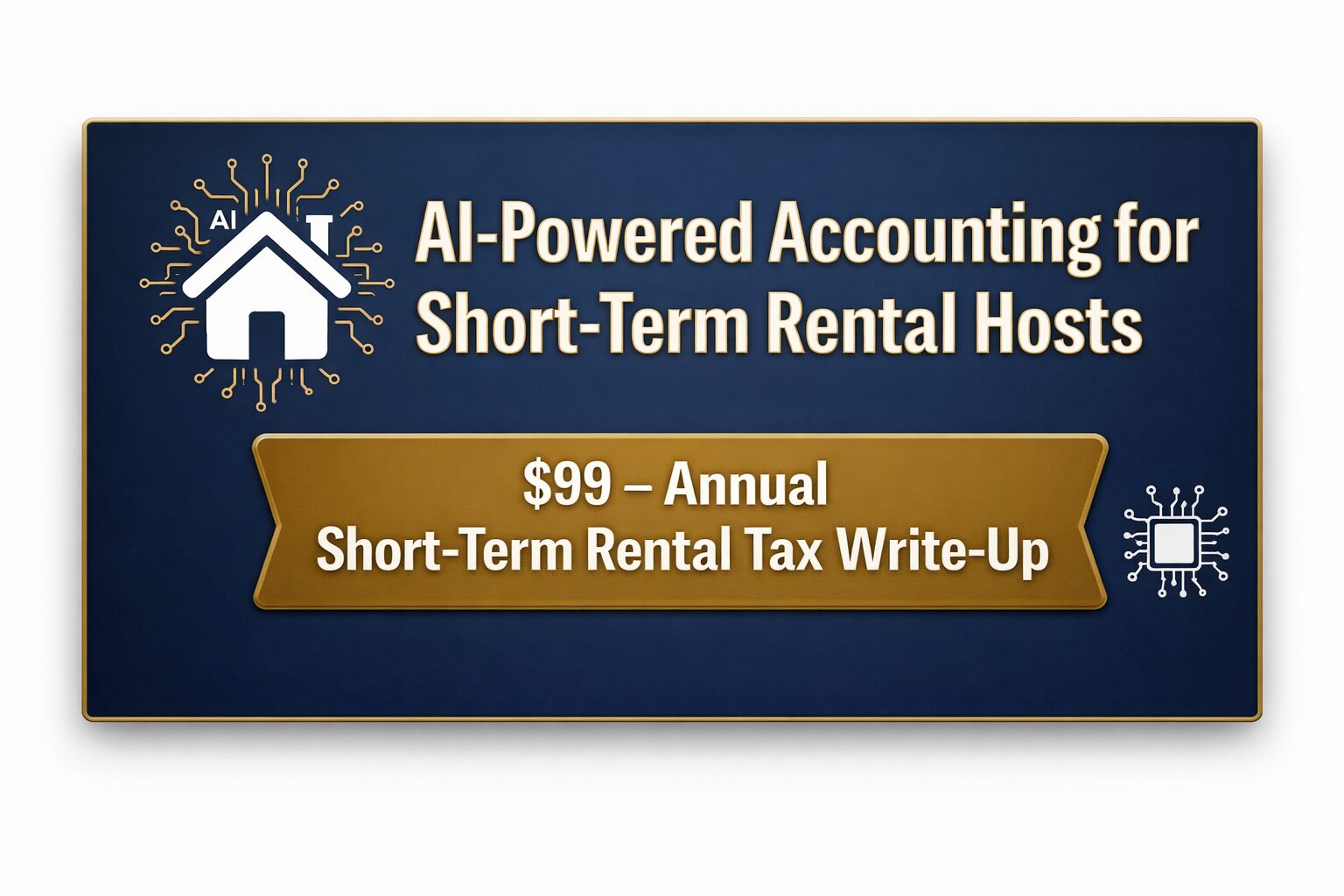
Special Offer! Free QBO Training, Setup & Consultation
 |
 |
 |
Airbnb tax advice.
Short term rental tax return preparation service. The best Airbnb tax advice. The sharing economy rental real estate expert. Therefore, the affordable Airbnb tax advice you can rely on. Unquestionably, the trusted short-term rental CPA. Comparably, the competition claims to be experts, but are lacking. Especially when it comes to the on demand economy.
Do you suffer from tax filing headaches? Call for relief! Notwithstanding. the short term rental CPA. Call for relief! 800-705-9968
Above all, discover the pitfalls and opportunities.
*Free Consultation
Above all, create a plan.
Those that fail to plan, plan to fail.
Course Title: Mastering Short-Term Rental Investments
Sign Up for Your Free STR Investment Course
Complimentary, free no obligation short term rental investment course. Unlock the secrets to successful short-term rental investing. Learn how to maximize your returns, navigate tax benefits, and find the best properties—all for free!
FAQ - Frequently Asked Questions
Do I have to pay tax on my Airbnb rental income?
Generally, yes. In most cases, you’ll need to report and pay tax on your Airbnb income. However, there’s one valuable exception worth knowing. Specifically, if you rent your property for 14 days or fewer in a year, the IRS treats it as “personal use,” and consequently, that income is completely tax-free. On the other hand, once you rent for 15 days or more, the IRS reclassifies it as rental income, and therefore you must report it. Ultimately, this Airbnb Tax Benefit, commonly called the 14-day rule, can deliver a meaningful saving for hosts who qualify.
When is Airbnb income considered rental versus ordinary income?
If you rent your property for 14 days or less in a year, the IRS considers it “personal use” and you don’t need to report the rental income—it’s tax-free! However, if you rent for 15 days or more, the IRS classifies this as rental income, requiring you to report it. This rule is commonly known as the 14-day rule and can be a significant tax-saving opportunity for short-term rental hosts who qualify.
What is the “7-day” rule, and why does it matter?
To begin with, this is one of the most misunderstood rules in short-term rental taxation. Essentially, if you rent your property for an average of 7 days or less per guest, the IRS views the activity as active business income rather than passive rental income. As a result, your Airbnb may qualify as a trade or business, which in turn unlocks a broader Airbnb Tax Benefit through additional deductions. By contrast, if the average guest stays more than 30 days, the income is generally classified as passive. Nevertheless, to offset rental losses against ordinary income, you’ll still need to meet one of the material participation standards.
What deductions can I claim as an Airbnb host?
Quite a few, actually—and unfortunately, many hosts leave money on the table. To start, common deductions include supplies for guests, such as toiletries, towels, and linens, along with cleaning and maintenance costs, utilities, property taxes, insurance, advertising fees, and management fees. In addition, two items are frequently overlooked: first, the mileage to pick up supplies, which surprisingly many hosts forget; and second, Airbnb host fees, since good accounting reports those host fees net of gross receipts. Altogether, capturing these expenses significantly increases your overall Airbnb Tax Benefit.
How do I split expenses between rental and personal use?
Whenever a property doubles as a personal residence, allocation becomes necessary. Accordingly, you must divide your expenses between rental use and personal use. As a rule, then, your rental expenses can be no more than your total expenses multiplied by the fraction representing rental versus personal use. Furthermore, expenses such as depreciation, real estate taxes, mortgage interest, and utilities must be prorated based on the days the property was used for business. For reference, the governing rules appear in IRC Sections 167, 168, 163(h), and 280A, which together guide depreciation, mortgage interest, and business/personal allocation—each affecting your final Airbnb Tax Benefit.
Can I still claim deductions if my property qualifies as personal use under the 14-day rule?
Yes, but with limitations. If you rent your property for 14 days or fewer, you can’t claim rental-related deductions on your tax return because you don’t report the rental income. However, you can still deduct property taxes and mortgage interest if you itemize.
What is the Short-Term Rental Tax Loophole?
The term “short-term rental tax loophole” often refers to the tax advantages available to property owners who list their properties for brief periods. However, it’s important to clarify that these benefits are not loopholes but legitimate applications of tax law. The IRS recognizes short-term rentals as a trade or business under specific conditions, allowing property owners to deduct related expenses and potentially reduce their taxable income. To qualify, owners must actively participate in the hospitality business. Additionally, meet certain criteria regarding the duration of rentals and services provided.
Do I owe self-employment tax on my Airbnb?
In short, it depends on classification. For instance, if your Airbnb qualifies as a business by meeting the 7-day or 14-day tests, then the IRS may require you to pay self-employment tax. Conversely, if it’s treated as passive rental income, you may not owe it at all. Therefore, getting this classification right is precisely where professional guidance maximizes your Airbnb Tax Benefit.
Do you file schedule C or E?
Sch C or E? Surprisingly, its schedule C. Explicitly, Pub 925 states an activity isn’t a rental activity if the average stay is less than 7 days. Consequently, this has tax implications if you have a loss, sell the property or need to pay self-employment tax. Henceforth, I reccomend a consultation with a qualified airbnb tax professional. In other words, a short-term rental CPA. Read Airbnb Schedule C or E to learn more.
Should you set up an LLC?
The advantages and disadvantages.
Firstly, the transfer-ability of ownership is vital. Secondarily, the flexibility of LLC interests are important. So, Limited Liability Company protection is important. Protecting yourself is vital.
Nine community property states.
You should consider the property state rules. There are nine community property states. So, there are more filing requirements:
The nine community property states are:
- Arizona
- California
- Idaho
- Louisiana
- Nevada
- New Mexico
- Texas
- Washington
- Wisconsin
Alaska is an opt-in community property state. The state gives both parties the option to make their property community property.
What is QBI, Qualified Business Income?
The TCJA introduced a new provision known as the “Qualified Business Income Deduction” or “Section 199A Deduction.” This deduction allows eligible taxpayers who own certain types of pass-through businesses (such as sole proprietorships, partnerships, S corporations, and certain limited liability companies) to deduct a portion of their qualified business income from their taxable income. The purpose of this deduction was to provide some tax relief to small business owners and entrepreneurs. In other words, to have parity with C Corporations. In other words, get the same lower tax rates which were enacted for C Corporations
The deduction is subject to various limitations and calculations based on factors such as the type of business, the total income of the taxpayer, the amount of W-2 wages paid by the business, and the unadjusted basis of qualified property held by the business.
What are the passive loss rules?
Passive activities are generally business or rental activities in which the taxpayer does not materially participate. Consequently, these rules were designed to prevent taxpayers from using losses from passive activities to offset their ordinary income, thereby reducing their overall tax liability.
Here are some key points:
- Passive vs. Non-Passive Activities: The IRS classifies activities into three categories: passive activities, non-passive activities, and portfolio income. Most importantly, passive activities include rental real estate and other business activities in which the taxpayer does not materially participate. Comparatively, non-passive activities are typically businesses in which the taxpayer is actively involved. Lastly, portfolio income includes interest, dividends, and certain capital gains.
- Passive Activity Loss (PAL): A passive activity loss occurs when the total expenses for a passive activity exceed the total income generated by that activity in a given tax year.
- Material Participation: Material participation is a key concept in determining whether an activity is passive or non-passive. Basically, if a taxpayer meets certain tests for material participation, the activity is considered non-passive, and losses from that activity can be used to offset other income.
- Deduction Limits: Passive losses can only offset passive income. Subsequently, any excess passive losses that cannot be immediately used are typically carried forward to future tax years. Moreover, there are limitations on the amount of passive losses that can be deducted against other types of income, such as ordinary income.
- Real Estate Professionals: If a taxpayer qualifies as a real estate professional (meeting specific criteria for time spent in real estate activities), they can deduct passive losses related to rental real estate against their non-passive income. Correspondingly, IRC Section 469(c)(7) refers to the exception for certain rental real estate activities to be treated as non-passive. Evidently. this provision allows individuals to treat rental real estate activities as non-passive if they materially participate in the activity, regardless of the general rules that classify rental activities as passive.
- Active Participation in Rental Real Estate: The IRS allows a limited deduction of up to $25,000 of passive losses from rental real estate if the taxpayer actively participates in the rental activity and meets certain income thresholds. This deduction phases out as income increases.
What is the Best Airbnb Tax Advice?
Tax considerations for Airbnb hosts are essential to ensure compliance and optimize your tax situation.
- Get a 2nd opinion: Given the complexity of tax rules and regulations, consider working with a qualified tax professional who specializes in rental property or self-employment taxes. They can help ensure you’re maximizing your deductions and complying with all tax obligations.
- Find out all the short term rental tax advantages.
What Short Term Rental Tax Advice you should look for?
The specialized guidance provided by tax professionals or financial advisors to individuals and businesses that earn income from renting out properties on a short-term basis. This includes rentals through platforms like Airbnb, Vrbo, Booking.com, and similar services. The primary goal of short-term rental tax advice is to help hosts navigate the complex tax regulations associated with temporary property rentals, ensuring compliance while optimizing financial outcomes.
Key Components of Short-Term Rental Tax Advice
- Income Reporting:
- Understanding Taxable Income: Guidance on how to accurately report income earned from short-term rentals on your tax returns.
- Tracking Revenue: Strategies for keeping detailed records of all rental income received, including payments from guests and any additional fees.
- Deductible Expenses:
- Identifying Deductibles: Information on which expenses related to your rental property are tax-deductible, such as maintenance costs, utilities, cleaning services, and property management fees.
- Maximizing Deductions: Tips on how to optimize your deductible expenses to reduce your overall taxable income legally.
- Depreciation:
- Asset Depreciation: Advice on how to depreciate the value of your rental property and its furnishings over time, potentially lowering your taxable income.
- Calculating Depreciation: Step-by-step guidance on calculating depreciation for different components of your property.
- Local, State, and Federal Tax Compliance:
- Navigating Regulations: Assistance in understanding and complying with various tax laws and regulations that apply to short-term rentals at different government levels.
- Filing Requirements: Information on specific tax forms and filing deadlines relevant to short-term rental income.
- Occupancy and Lodging Taxes:
- Understanding Obligations: Clarification of your responsibilities regarding occupancy taxes (also known as lodging or transient taxes) imposed by local jurisdictions.
- Collection and Remittance: Guidance on how to properly collect these taxes from guests and remit them to the appropriate authorities.
- Business Structure and Tax Planning:
- Choosing the Right Entity: Advice on selecting the most beneficial business structure (e.g., sole proprietorship, LLC, corporation) for your short-term rental operations.
- Tax Strategies: Development of tax planning strategies to minimize liabilities and enhance financial efficiency.
- Record-Keeping and Documentation:
- Organizing Financial Records: Best practices for maintaining accurate and organized financial records related to your short-term rental activities.
- Audit Preparedness: Ensuring you have the necessary documentation to support your tax filings in case of an audit.
- Handling Multiple Properties:
- Scaling Operations: Tax advice tailored to hosts managing multiple short-term rental properties, addressing the complexities that come with scaling.
- Consolidated Reporting: Strategies for consolidating income and expenses across various properties for streamlined tax reporting.
In conclusion, affordable tax consulting. As stated above, the Airbnb CPA who fits your goals.
Why hire a CPA who specializes in short-term rentals?
Quite simply, because the rules differ genuinely from ordinary real estate. Since real estate rules and short-term rental rules aren’t the same, it’s wise to seek quality short-term rental advice. Regrettably, many taxpayers and even tax preparers lack this expertise. Looking ahead, moreover, there’s a growing compliance reason: eventually, short-term rental desk audits will increase—and a desk audit, by definition, is when the IRS sends the taxpayer an information request. For all these reasons, expert guidance ensures you capture every available Airbnb Tax Benefit.
Get a second opinion. Ultimately, given the complexity of these rules, it’s smart to work with a qualified tax professional who specializes in rental property or self-employment taxes. After all, the right expert helps you maximize every Airbnb Tax Benefit while staying fully compliant.
📞 Call 800-705-9968 for a free, friendly Airbnb tax consultation.
Cost Segregation Study
Free Resources


How to get MACRS or Tax Depreciation
When using the Double Declining Balance method for depreciation, a switch to the Straight-Line method typically occurs when Straight-Line results in a larger expense than Double Declining Balance for the remaining asset value. This usually happens because DDB emphasizes heavier depreciation in the earlier years, while SL provides a consistent expense throughout the asset’s useful life.
.
How to Determine the Switch Point
- Calculate Annual Depreciation: Compute annual depreciation using both the Double Declining Balance and Straight-Line methods.
- Monitor Yearly Amounts: During each year, compare the depreciation expense calculated by the DDB method with the expense that would result from switching to the Straight-Line method.
- Switch When SL Is Greater: When the depreciation expense under the Straight-Line method for the remaining useful life becomes greater than the expense using DDB, switch to Straight-Line for the rest of the asset’s life.
In summary, the switch occurs at the point where the remaining book value divided by the remaining life (Straight-Line) exceeds the depreciation expense calculated using the DDB method. This ensures the asset is fully depreciated by the end of its useful life
Free Simple Rental Property Forecast Excel Workbook
Airbnb tax advice.
Simple forecast. Primarily, 30/15 yr conventional mortgage financing.
Details
Wow! David is an absolute master of numbers and helped me get my airbnb business started, quickbooks setup, and even advised me on every aspect of accounting and taxes for my new business. This is the first time i’ve worked with a CPA who I can actually call and get a quick answer from or categorize a charge as “ask my accountant” and he will categorize it properly. David has spent over 3 hours cumulatively on video calls with me to ensure I know how to properly run my new business and how to connect my bank accounts, run payroll, and properly book-keep. 10/10 recommend!!!
- QBI "Qualified Business Income"
- Depreciation
- Airbnb General Expenses
- Personal Use (Schedule A vs Schedule E)
Primarily, the “days available” rule for separate rental properties doesn’t apply to personal residences. For this reason, you divide your expenses between rental use and personal use. Therefore, your rental expenses will be no more than your total expenses multiplied by the fraction of rental and personal use. If you need more explaining call me at 800-705-9968
Therefore, choosing whether to be a trade or business activity is vital. Also, if you own your own home, the decision to be a trade or business should be considered.
From 2018 through 2022, rental hosts can use 100% bonus depreciation. Therefore, you can write off assets in a single year. Notwithstanding, the full cost of long-term personal property. Moreover, the 2018 tax cuts job act allows used property to qualify for bonus depreciation. So, it can be used for new and used personal property. However, It may not be used for real property. Undoubtedly, understanding the distinction is important.
Lastly, hosts can use a provision of the tax code, called Section 179. They can deduct in one year up to $1 million of personal property . However, section 179 can only be used for property which is used over 50%. In other words 50% of the time for the rental activity. Consequently, many short-term hosts who live in their property “a majority of the time” are limited.
Sadly, I often see many depreciation expense mistakes. Therefore, I recommend Airbnb hosts contact a rental real estate tax expert. Lucky for me, I’m an MBA CPA rental real estate expert. In addition, I’m a QuickBooks Pro Adviser. Call me at 800-705-9968. I offer one hour of free QBO setup and consultation for all my clientele.
Above all, the correct depreciation is important. When you sell the property its important to have the correct depreciation. Real estate pro’s know how important it is. Because they know the importance, they hire accounting real estate tax experts. Hiring a tax expert is vital to success.
General expenses include:
- Cleaning and maintenance fees. This includes laundry and cleaning supplies.
- Property insurance. Notably private mortgage insurance (PMI) needs to be reported separately.
- Service fees charged by Airbnb. Similar treatment for another host site.
- Utilities (water, gas, electricity, TV, internet, etc.).
- Repairs made to the rental property. This includes furniture and appliances.
- Mortgage loan interest.
- Advertising.
Above all, a great accounting system is critical to success. I help clients set up WaveApp, QuickBooks and Xero. WaveApp is a free application.
Primarily, the “days available” rule for separate rental properties do not apply to personal residences. Consequently, you must divide your expenses between rental use and personal use. Therefore, your rental expenses will be no more than your total expenses multiplied by the fraction of rental and personal use.
Rental real estate tax planning can minimize taxes. For instance, deciding when to pay real estate taxes can reduce income taxes. Similarly an extra mortgage payment can reduce taxes. Most importantly, knowing when you plan to sell the property is important. Call 800-705-9968 for Airbnb tax advice.

Airbnb tax advice.
Airbnb CPA
The best Airbnb tax advice? Hire a real estate tax expert. Primarily, an adviser who understands the complex US rental tax rules. Secondarily, keep informed. In other words, keep up with Airbnb sharing economy tax legislation. Thirdly, learn what the Tax Cuts Jobs Act is. In other words, discover planning opportunities. Most importantly, get a short term rental real estate 2nd opinion. Most importantly, an Airbnb CPA 2nd opinion.
Rent your own home?
Renting a portion of your primary residence.
Many taxpayers count the days a property is rented. However, per IRS publication 527, you can deduct any expense, it is available for rent. In other words, you can deduct expenses, such as depreciation when its available. On the other hand, primary residence rules are different. In addition, the home owner needs to report the rented space. In addition, you need to count the days rented. If you need rental real estate tax advice, call 800-868-0564
SALT Airbnb tax advice
State, local and property taxes, is limited to $10,000.
This is known as the “SALT” limitation. The Tax Cuts Job Act of 2017 changed things for Airbnb hosts. The Tax Cuts Jobs Act is called the “TCJA”. The standard deduction is typicaly more than itemized deductions. Schedule A on the 1040 is where you list itemized deductions. However, Airbnb owners can deduct property taxes. They can do so, even if they rent a portion of their home. They would show a portion of their property taxes either on schedule C or Schedule E.
Helping rental real estate investors since ’92.
Above all, friendly & experienced short term rental tax advice.
Certainly, there are circumstances which need explaining. Because the short-term rental real estate rules are complex, I have the utmost patience. Above all, I provide free friendly consultation. Furthermore, the trusted short-term rental CPA. In other words, real estate tax advice you can rely on. Lastly, I am technologically efficient. As a result, we offer affordable tax preparation fees. Short-term rental hosts know keeping fees, affordable is vital to success. Therefore, we offer affordable Airbnb CPA tax prep fees

Big 4 – real estate tax expert
Professional “REIT”, real estate tax partnerships and international real estate tax experience. Above all, I am proud to provide short-term rental CPA services. Lucky for me, I offer quality Airbnbtax advice. In other words, I’m the Airbnb CPA you can rely on. Lastly, I’m a cost segregation expert.
Cost segregation specialist
Maximize your short-term rental investment. What can a cost segregation study do for you?
Discover the process and its benefits. Get a multi-year tax projection so you can get the most out if it. Read more>>
Airbnb tax advice
Hire an expert for your rental real estate filing needs. Most importantly, hire a short-term rental CPA who can represent you in front of the IRS. Lucky for me I’m a Airbnb CPA as well as real estate tax expert.
MBA Finance & Real Estate Experience
I offer financial modeling for rental real estate. Primarily, I create models to make better choices. Notably, I’ve created friendly client “DIY” Excel models. In other words, I recommend you download my rental real estate excel workbook.
Financial Rental Real Estate Quarterback
Get a 2nd opinion
Get Airbnb tax advice. Nobody has a monopoly on all the information. Certainly, not the Internal Revenue Code.
Most importantly, there are both pitfalls as well as opportunities. Hire an Airbnb CPA!
Short Term Rental Tax Advice

Maximize Your Short Term Rental Investment
Unlock tremendous benefits. Undoubtedly, a cost segregation study (CSS) is a tax strategy tool used by short-term rental hosts to accelerate depreciation. If your schedule C net income is negative, it will offset other active income.

Most importantly, wages and income from other businesses are active income.
Short term rental CPA. Free consultation. Above all, you’ve done the hard part. Let me take you into the end zone. Friendly affordable Airbnb tax advice.

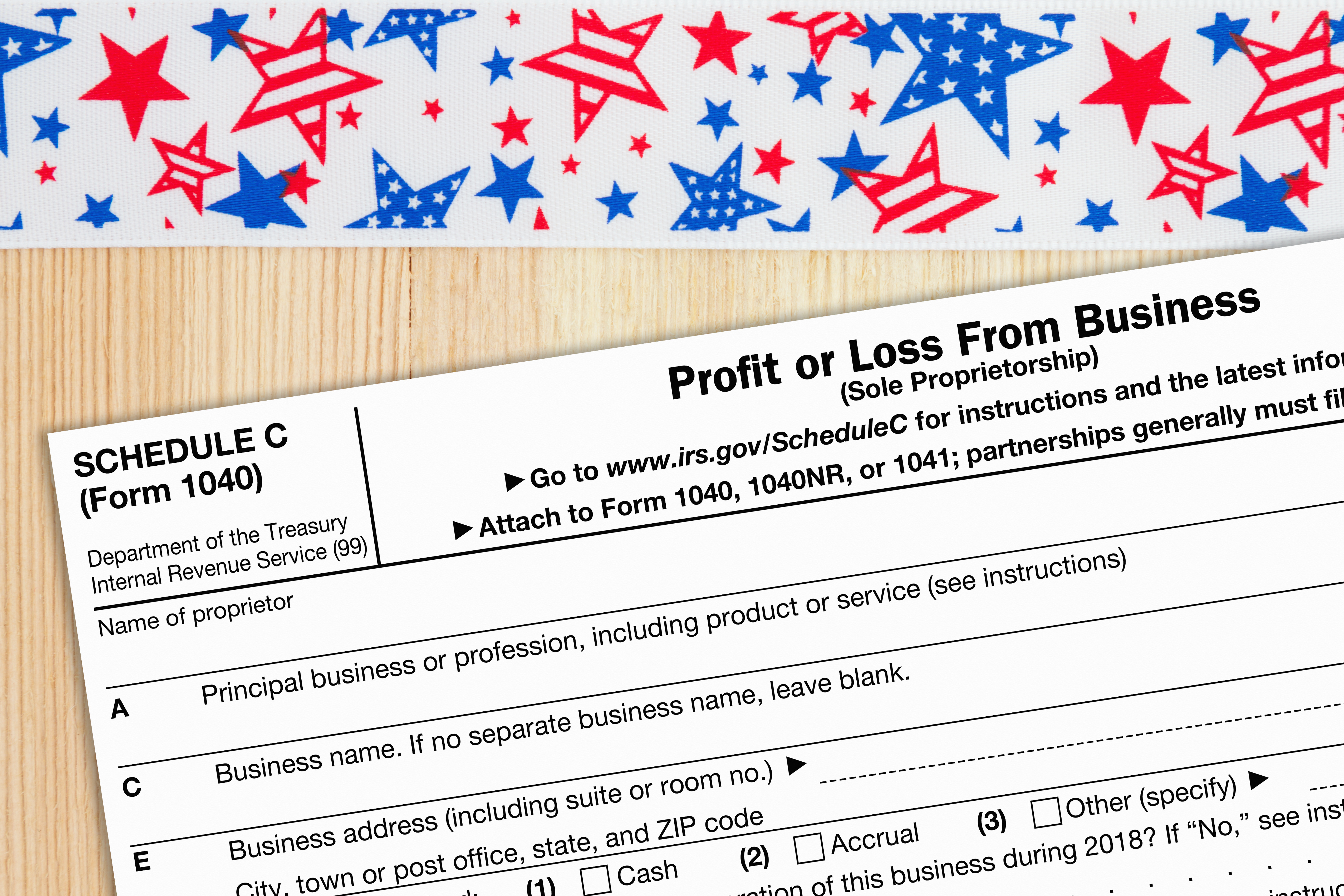
Schedule C or E?
Discover the Best Option for Your short-term rental activity.
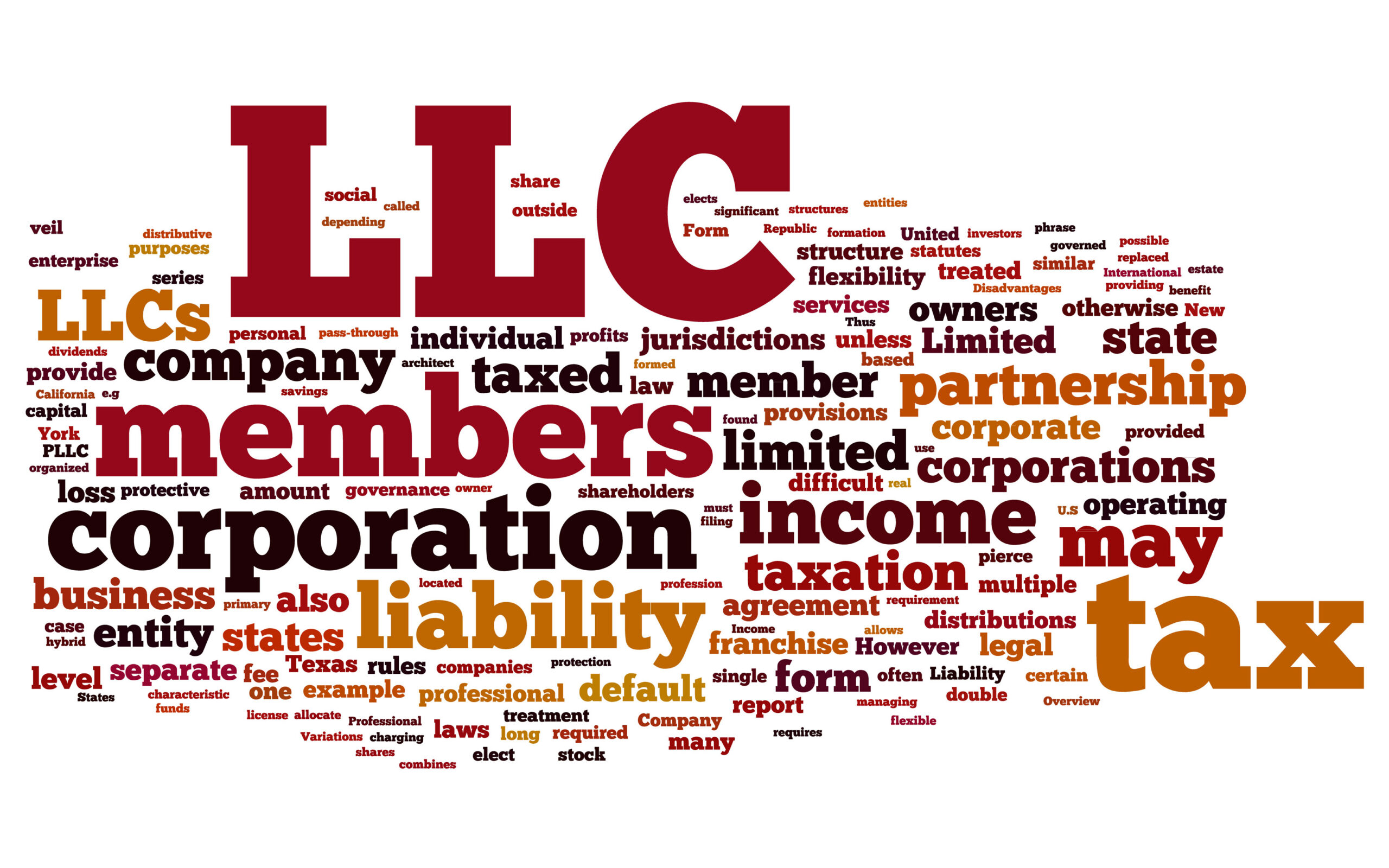
Why choose an LLC?
A popular form of doing business.
Airbnb tax advice.

Special Offer!
One Hour Free QB Setup and Consultation
|
|
Located in the Galleria Mall, Fort Lauderdale
Schedule a time to visit usConvenient Location

David Weinstein MBA CPA CFE
Contact Us
For inquiries or requests which require a more personal response, I will make every attempt to respond.